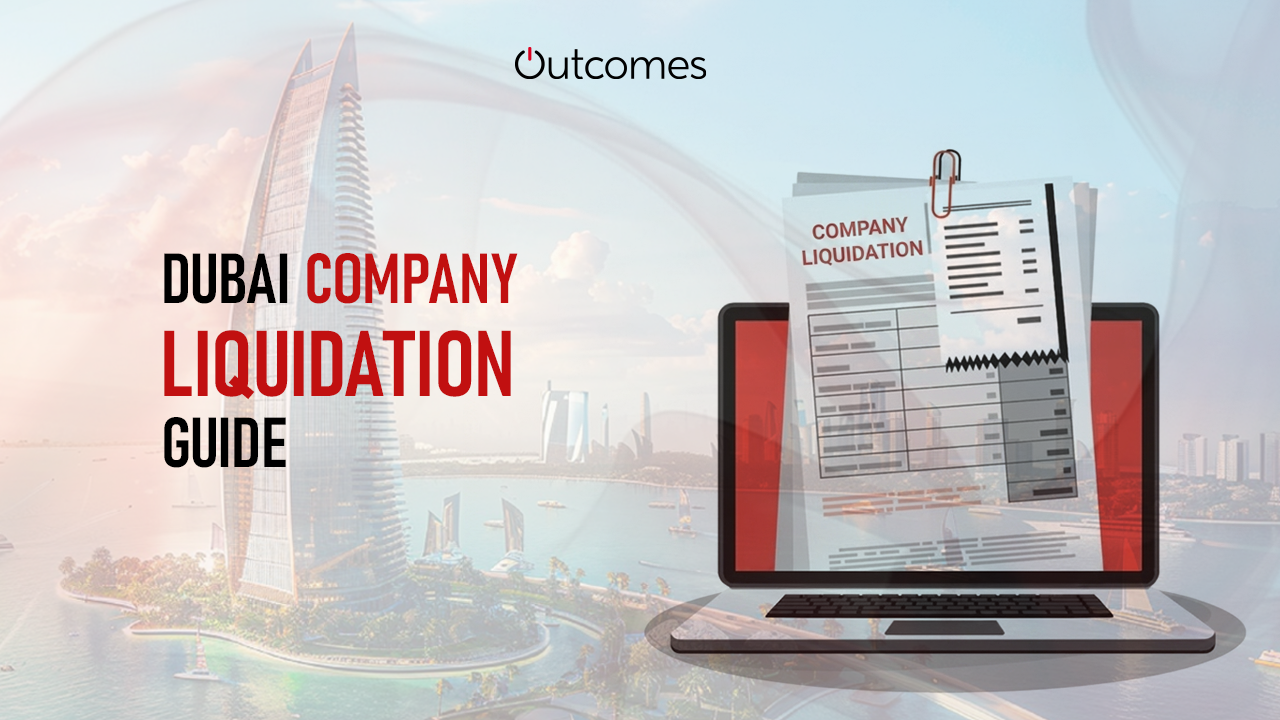

Many business owners searching for how to close a company in Dubai are often surprised by the number of regulatory steps involved that require more than simply stopping operations or allowing a trade license to expire.
This guide explains everything you need to know about company liquidation in Dubai to help you avoid penalties, liabilities, immigration issues, and future compliance problems.
You will learn how companies operating in Dubai and across the UAE must follow an official legal process to close their business properly, including the required procedures, liquidation costs, necessary documents, and how professional consultants can simplify the process.
What Is Company Liquidation in Dubai?
Company liquidation is the legal process of officially closing and deregistering a business entity in the UAE.
The process ensures that all financial obligations, employee matters, government approvals, and regulatory requirements are properly settled before the company is removed from official records.
The liquidation process may include:
- Cancelling the trade license
- Settling outstanding debts
- Closing corporate bank accounts
- Cancelling visas and labour cards
- Deregistering VAT accounts
- Obtaining government clearances
- Submitting final liquidation reports
Once completed, the business is officially dissolved and no longer legally active.Businesses operating on the mainland, in free zones, or offshore jurisdictions may each follow slightly different liquidation procedures depending on the relevant authority.
Liquidation Differences Between Mainland, Free Zone, and Offshore Companies
Liquidation procedures in the UAE differ based on the company’s structure, which impacts the required steps, approvals, and processing time.
| Company Type | Liquidation Authority | Liquidation Authority | Process Characteristics |
| Mainland Companies | Relevant UAE economic departments | License cancellation, labour clearance, immigration cancellation, and bank closure | More detailed process involving multiple government entities |
| Free Zone Companies | Respective free zone authority | Clearance from the free zone, visa cancellation, and asset settlement | Usually faster with streamlined procedures within the free zone |
| Offshore Companies | Offshore registry authority | Deregistration request, compliance clearance, and corporate documentation closure | Simplified process with minimal operation |

When Should You Consider Liquidating Your UAE Company?
There are several situations where business owners may choose to liquidate a company in Dubai or elsewhere in the UAE.
Common reasons include:
- Business inactivity
- Financial losses
- Strategic restructuring
- Relocation to another country
- Partnership disputes
- Business mergers or acquisitions
- Market changes
- End of commercial operations
Some companies also choose voluntary liquidation in the UAE free zone procedures when they no longer require their free zone entity but want to avoid future renewal costs or compliance penalties. It is generally recommended to begin liquidation before license expiry to reduce the risk of accumulating government fines and administrative complications.
Company liquidation in the UAE often involves additional steps that require value-added services to handle documentation, compliance, and government procedures efficiently. At Outcomes, our value-added services extend to supporting businesses through every stage of their lifecycle, including company liquidation in the UAE.
Company Liquidation Process in Dubai — Step by Step
The exact company closure process in Dubai depends on the company structure and jurisdiction, but most UAE company liquidations follow these key steps.
1. Pass a Shareholder Resolution
The shareholders or partners must officially approve the company closure. For many LLCs and corporate entities, appointing a licensed liquidator is mandatory.
This step typically includes:
- Board resolution
- Shareholder decision
- Appointment of a liquidator
- Notarisation of documents
2. Appoint a Liquidator
A licensed liquidator prepares the official liquidation documentation and oversees the process. Working with a professional company liquidation consultant that Dubai businesses trust can significantly reduce delays and compliance risks. The liquidator may assist with:
- Financial review
- Clearance procedures
- Creditor notifications
- Final liquidation report
- Regulatory submissions
3. Apply for Initial Approval
The liquidation request is submitted to the relevant authority, such as:
- Department of Economy and Tourism (DET)
- Department of Economic Development (DED)
- Free zone authority
- Offshore registrar
Authorities then issue initial approval to begin liquidation procedures.
4. Publish Liquidation Notice
For mainland companies, a liquidation notice is commonly published in local newspapers to notify creditors.
The notice period usually lasts around 45 days, allowing creditors to submit any claims against the company.
This is one of the most important legal requirements in the company closure process in Dubai.
5. Settle Financial Obligations
Failure to clear obligations may delay liquidation approvals, so the company must clear all liabilities before final deregistration, including:
- Supplier payments
- Employee salaries and gratuities
- Utility bills
- Office lease obligations
- Loans and financing
- Government penalties
- VAT liabilities
6. Cancel Employee Visas and Labour Files
All immigration and labour matters must be resolved before the company can close, such as
- Cancelling employment visas
- Closing labour files
- Cancelling establishment cards
- Completing employee settlements
Businesses must also ensure compliance with UAE labour regulations during employee termination procedures.
7. Deregister VAT and Tax Accounts
Companies registered for VAT or corporate tax must complete tax deregistration with the Federal Tax Authority.
Businesses seeking to deregister company UAE entities should ensure all tax filings and payments are fully completed before applying for final cancellation.
8. Cancel Trade License Dubai
Once all approvals and clearances are obtained, the final step is to officially cancel trade license Dubai records with the relevant licensing authority.
After approval, the company is removed from the UAE commercial register and legally dissolved.
Company Liquidation Cost in Dubai
The company liquidation cost Dubai businesses pay depends on key factors such as jurisdiction (mainland or free zone), number of visas, outstanding liabilities, and required government approvals. On average, company liquidation in Dubai ranges between AED 8,000 and AED 40,000, depending on the complexity of the company closure process.
Additional costs may arise in cases involving active employees, VAT obligations, unpaid debts, or pending clearances. These factors can significantly affect the final company liquidation cost that Dubai businesses incur.
Item | Average Cost (AED) |
Mainland company liquidation | 15,000 – 40,000 |
Free zone company liquidation | 8,000 – 35,000 |
Liquidator fees | 2,500 – 10,000 |
Trade license cancellation | 1,000 – 5,000 |
Newspaper publication | 1,500 – 3,500 |
Visa cancellation (per visa) | 500 – 2,000 |
VAT deregistration | 1,000 – 5,000 |
Audit report | 2,000 – 8,000 |
Documents Required for Company Liquidation in Dubai
The required documents vary depending on the business structure and licensing authority.
Commonly required documents include:
- Trade license copy
- Memorandum of Association (MOA)
- Shareholder resolution
- Passport copies of shareholders
- Emirates ID copies
- Visa cancellation documents
- Establishment card copy
- Bank account closure letter
- VAT deregistration confirmation
- Clearance certificates
- Liquidator appointment letter
- Final audit or liquidation report
Some authorities may request additional compliance documents depending on the company activity.
Mainland vs Free Zone Company Liquidation
Mainland and free zone companies follow different liquidation procedures.
Mainland company liquidation
Companies in mainland often require:
- Newspaper publication
- DED approvals
- Labour and immigration clearance
- Licensed liquidator appointment
Voluntary liquidation of a UAE free zone
Free zone companies may follow simplified procedures depending on the authority.
Some free zones provide faster company closure options if:
- No visas are active
- No liabilities exist
- Office contracts are completed
- All government fees are paid
The complexity of liquidation varies widely between free zones.
Why Choose Outcome for Liquidation Consultant in Dubai?
Outcome provides legal and compliance services for the company closure Dubai process, ensuring smooth handling from documentation to final trade license cancellation.
Our services include company liquidation consultation, mainland and free zone closure, trade license cancellation, VAT deregistration, visa cancellation, and liquidator coordination.
Frequently Asked Questions
To close a company in Dubai, businesses must complete a formal liquidation process that includes shareholder approval, settling liabilities, cancelling visas, deregistering tax accounts, and cancelling the trade license.
The timeline depends on the jurisdiction, liabilities, and approvals required. Simple closures may take several weeks, while complex liquidations can take several months.
Some free zones may allow simplified closure procedures, but many mainland companies legally require a licensed liquidator.
Costs vary based on company type, visas, liabilities, government fees, and liquidator charges.
Failure to cancel trade license Dubai records can lead to fines, compliance penalties, immigration issues, and ongoing renewal obligations.
In many cases, yes. Some free zones offer simplified procedures compared to mainland company closures, especially for inactive businesses without liabilities.